SELECTION OF EXHIBITIONS
2025 “Spiegel im Spiegel”, Dresden, Germany.
The exhibition “Spiegel im Spiegel”, brings together the work of German and Estonian greats, from Lucas Cranach to Arvo Pärt and Gerhard Richter and was opened in the magnificent Lipsiusbau art building in Dresden in 6. MAY, 2025
This is the largest exhibition of Estonian art in Germany ever. The exhibition is organized in cooperation with the Dresden State Art Collection (Staatliche Kunststammlungen Dresden, SKD) and the Art Museum of Estonia.
Additionally, the show explores the multi-layered history of cultural relations between Estonia and Germany through 150 masterpieces. Including August Matthias Hagen ja Caspar David Friedrich, Max Pechsteini ja Joseph Beuys, Eduard Wiiralt, Konrad Mägi, Ülo Sooster and many other great figures in art history and today. Also one of my marine paintings was exhibited there.
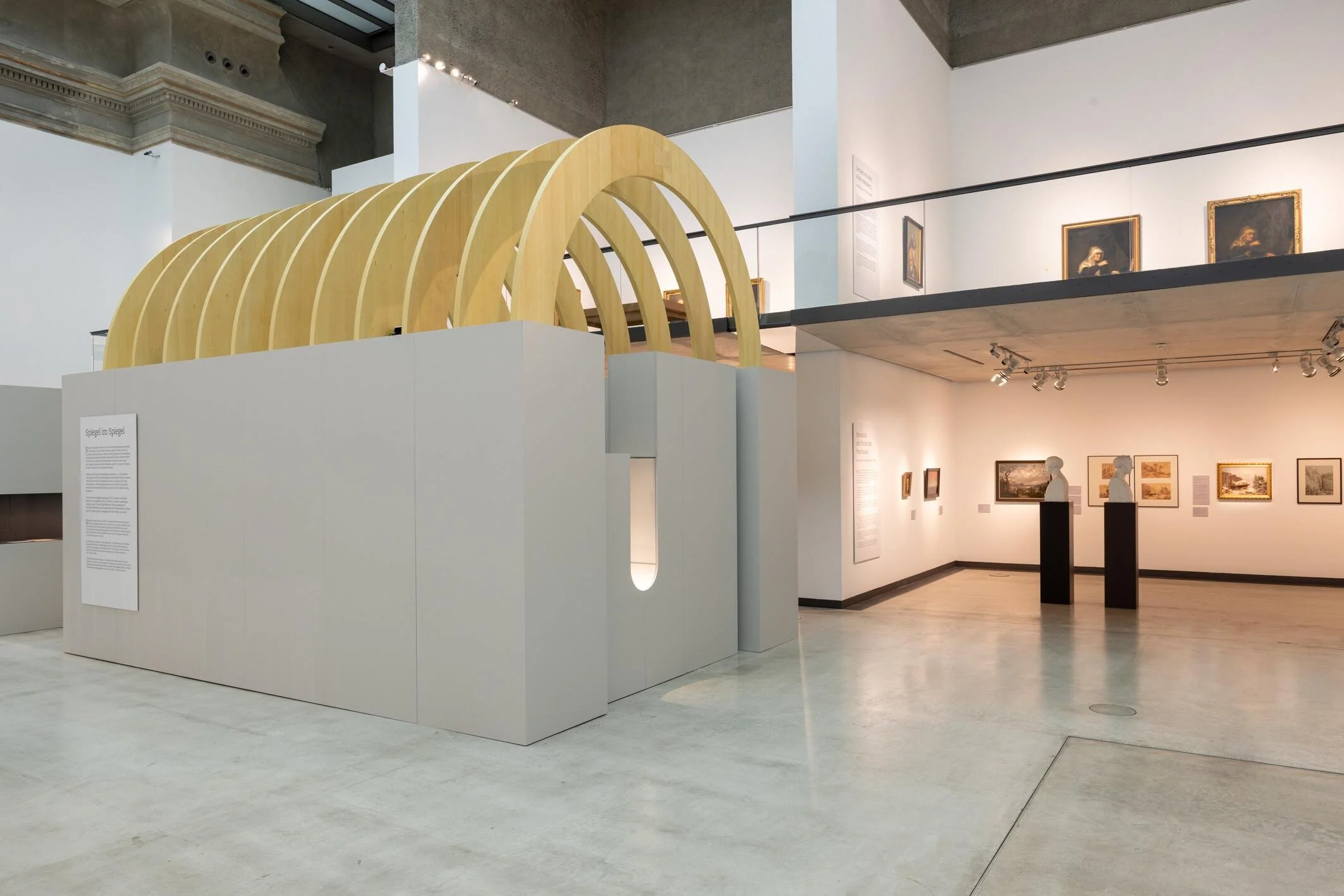
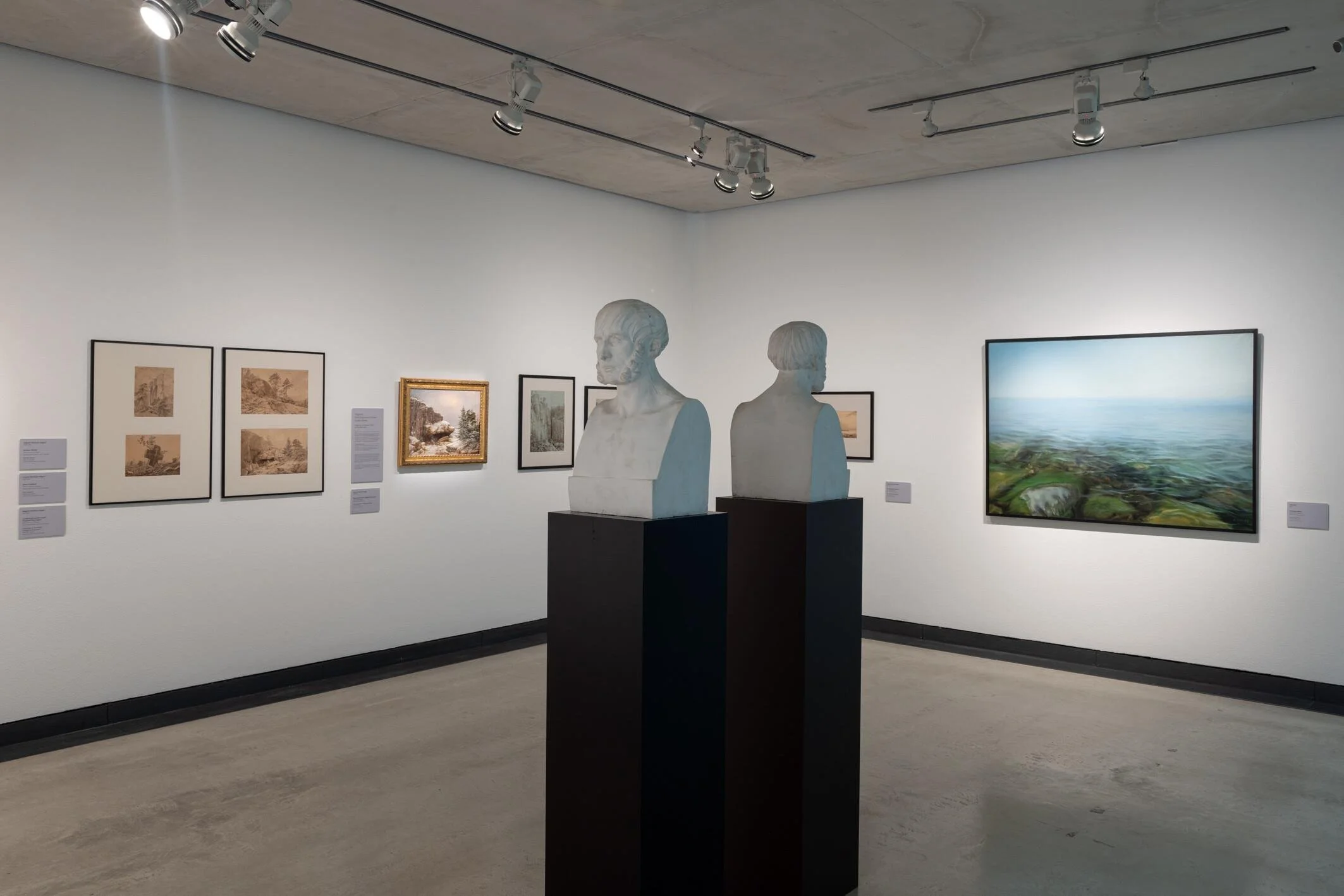
I am proud to have my painting “Stony Sea” presented in the main hall of the exhibition with Arvo Pärt’s Model of the Estonian Arvo Pärt Centre Chapel.

Aili VINT “Stony Sea” 1975 , Oil in canvas 115 x 135 cm
Tallinn Kumu Art Museum
The story related to this painting
To me, the Stony Sea is the most important of my seascapes, because it was the source of a very powerful event. Once upon a time, when I was painting translucent water, I suddenly received shocking news that a young acquaintance of mine had taken her own life. While painting the picture, I remember wondering whether this profound angst I felt at the time would remain trapped in that picture.
Years later I received an answer. — A complete stranger came up to me, started scolding me for no longer painting the sea. Then she went on, searching for words: ”Your picture saved my life, you know…”She told me that she had wanted to end her life, to give herself to the sea. But a friend took her to the Kadriorg Art Museum to see one of my seascapes. The painting had mesmerized her, calling her back again and again. It offered her unaccountable consolation, until it finally calmed her down. This painting was The Stony Sea…
Ljubljana, Slovenia
Official introduction of a participate: (Link)
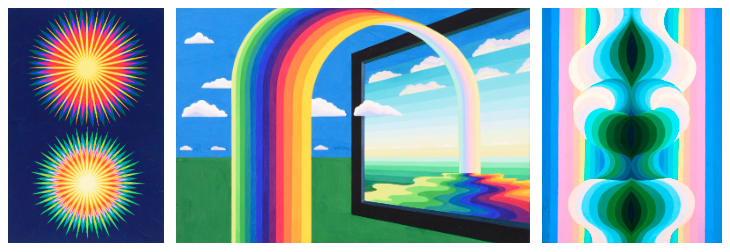
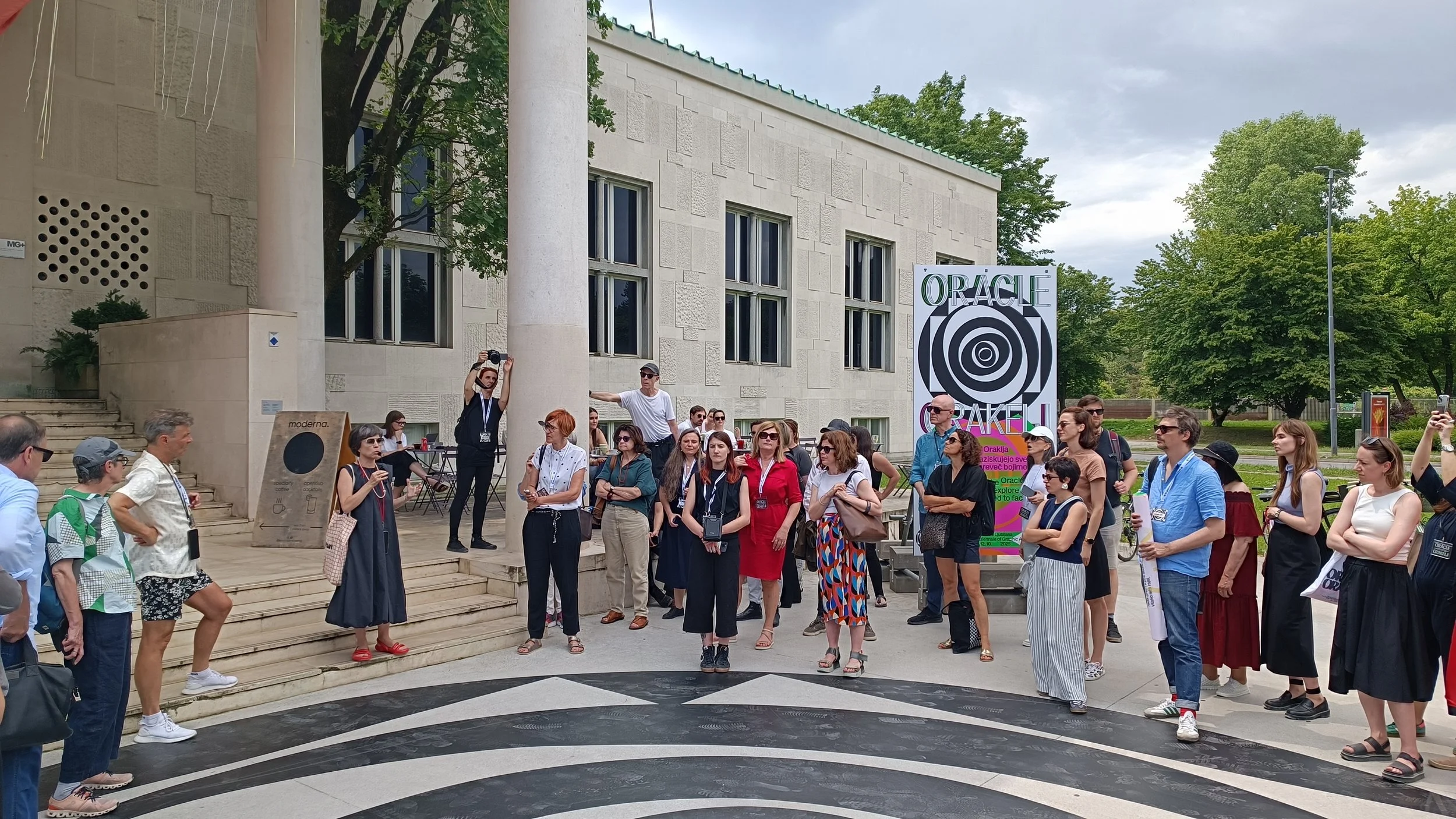
Aili Vint participates at the 36th Ljubljana Bienniale of Graphic Arts, titled “The Oracle”, opening on 6 June. The bienniale is curated by Chus Martínez. Vint will be presenting gouache pieces and installations created during the 1970s and 1990s. Her participation is facilitated by the Estonian Centre for Contemporary Arts.
03.06.2025
2025 - 36th Ljubljana Biennale of Graphic Arts”
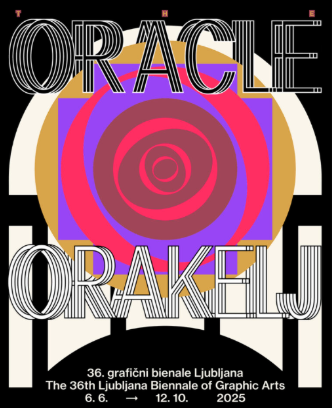
Invitation to participate:
Saatja: Chus Martinez <chus.martinez@fhnw.ch>
Dear Aili, I am very glad to invite you formally to be one of the artists participating in the 36. Ljubljana Biennale of Graphic Arts. As we already spoke, I would like to work with wonderful artists that are also new for me and create a community of people that add content and energy in this wonderful context. Ljubljana is for me a model on how to design an art event for and from a small community. The biennial has a goal to address and discuss the most important question of our present: how to regenerate democracy, how to motivate the citizens to trust and build a sense of solidarity that ensures a society free of violence and able to support the values of equality, diversity and peace.
Lots of regards!
Prof. Dr. Chus Martínez
I was struck by a sudden wave of happiness that I now have a Curator and I am willing to let myself be “tamed.” And with such a top-notch Curator as Prof. Dr. Chus Martínez.
Chus Martínez is a curator, lecturer and researcher. She is the director of the Institute for Art, Gender and Nature Studies at the FHNW Academy of Arts and Design in Basel.
She is also co-curator of the TBA 21 Foundation in Madrid and Venice and artistic director of the 36th Ljubljana Biennial of Graphic Arts.
Chus fell in love with my gouach paintings while visiting Tallinn and here are samples of the works that were presented:
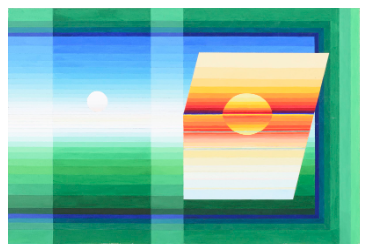
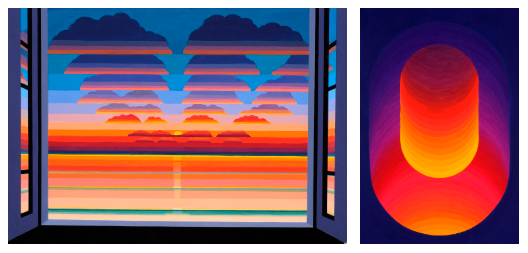
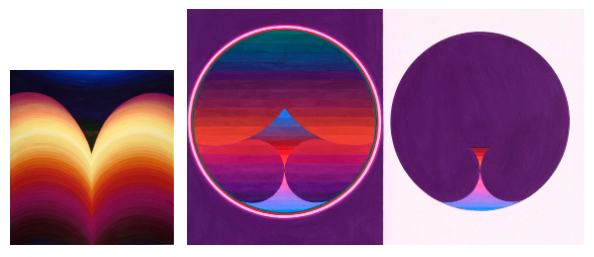
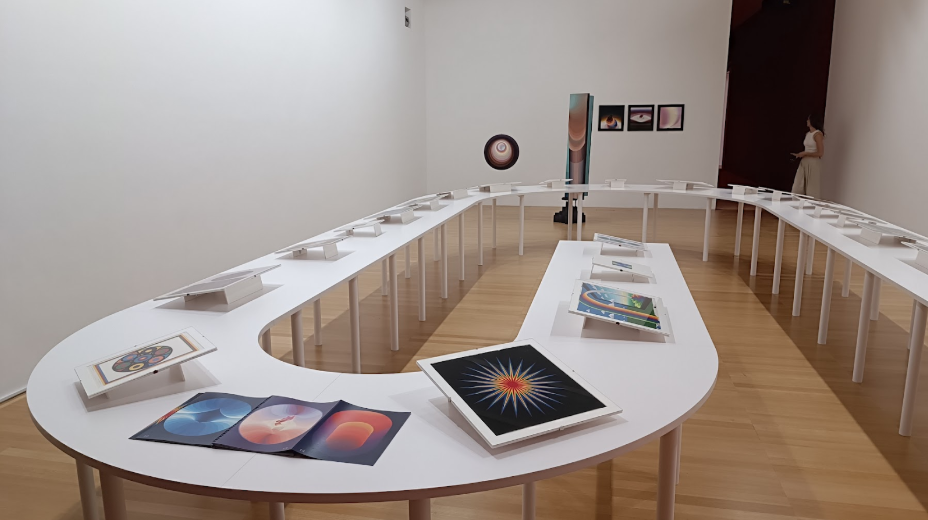
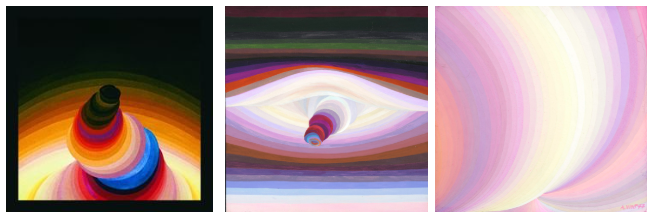
Soon you can read longer story about my experience with this exhibition.
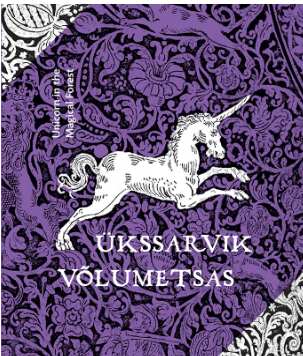
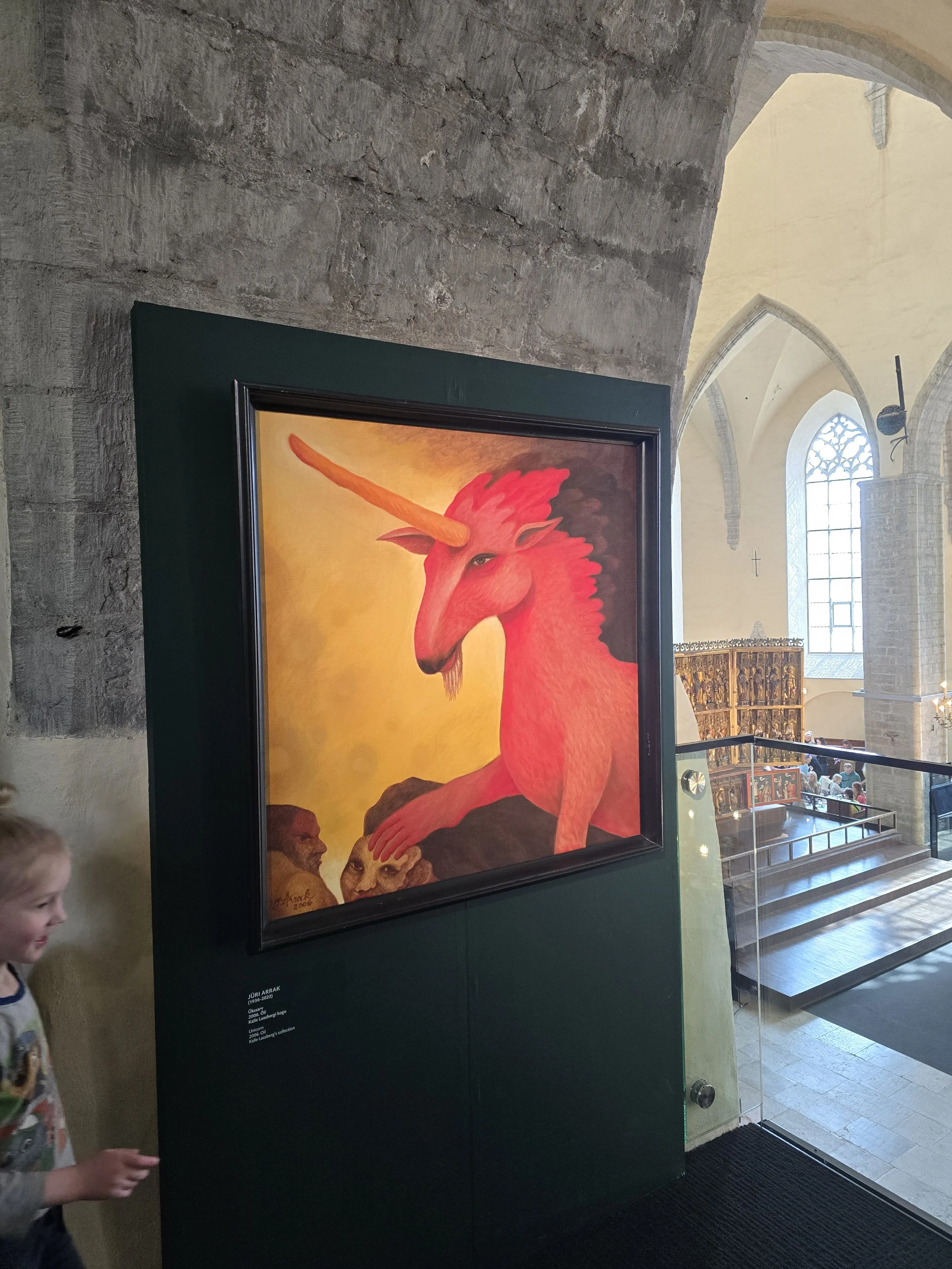
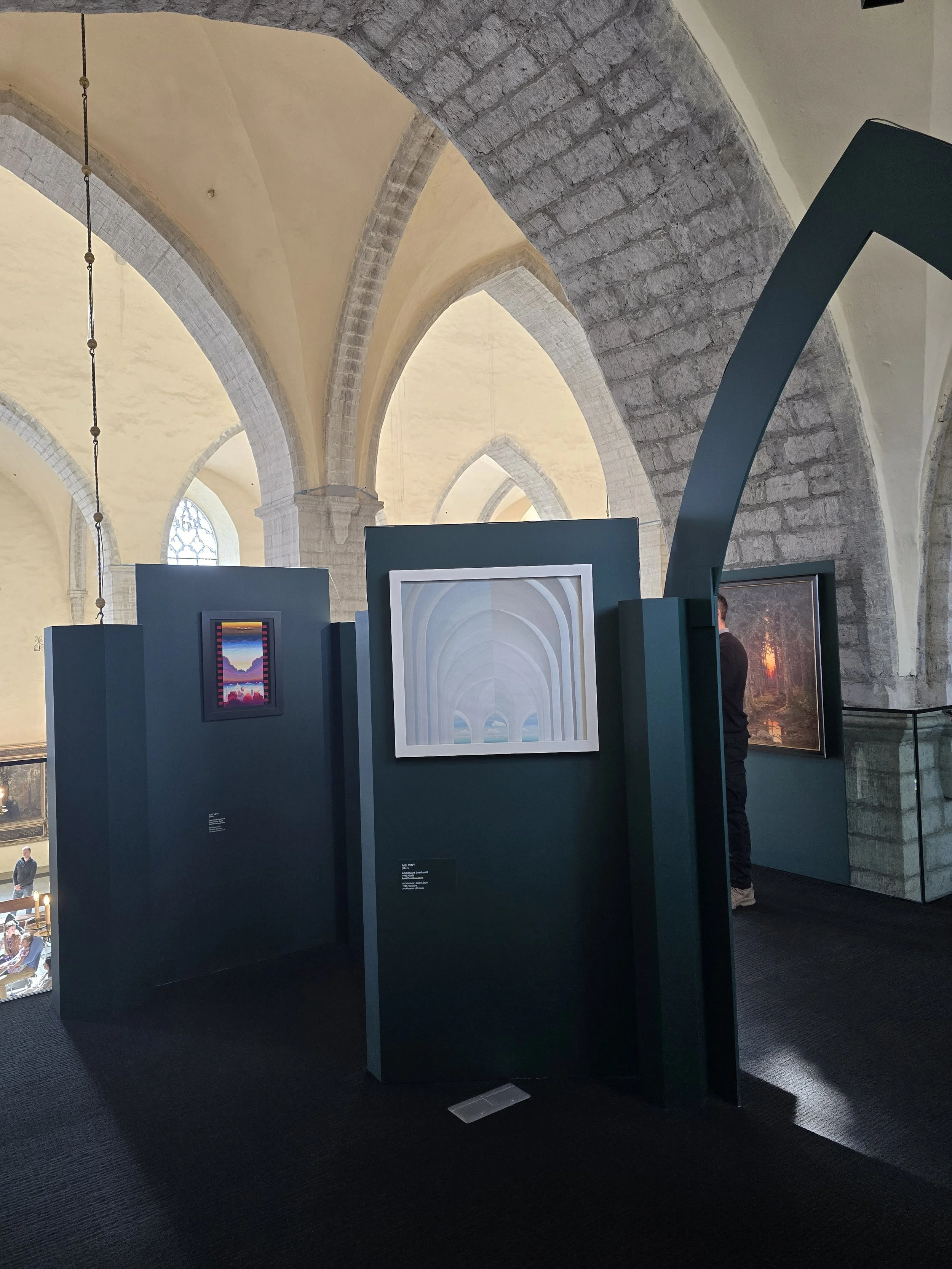
2024 UNICORN IN MAGICAL FOREST in Niguliste Museum
Unicorn: Famous Animals that no one has been.
The book accompanies the exhibition Unicorn in the Magical Forest
at the Niguliste Museum (07.09.2024 -- 06.04.2025).
“Maybe our Unicorns will continue their journey after visiting the
Niguliste Museum!”, hoped Malin Grundberg, the Swedish Royal
Armoury, Museum Director National Historical Museums in Sweden.
“Now I will believe that there are Unikorns…” William Shakespeare “The Tempest” ( Akt 3, Scene
A Unicorn is a mythical, mysterious and sacred animal, who has had, in the course of centuries, different roles in folklore and mythology as well as in noble courts, even in serious scholarly writing.Today it belongs to the world of fantasy and popular culture, but a few hundred years ago people believed that it truly existed. Who is the Unicorn and why does it occur in the form of a beautiful horse?
This book examines the meaning of the unicorn through history and shows unicorns on objects and works of art from the 16th to the 21st century. Rare Early Modern Period royal artefacts from the Swedish Royal Armoury reveal the symbolic meaning and use of images of the Unicorn during the period, when the kings of Sweden ruled over Estonia and Livonia. The works from the Estonian collections introduce the local presence and significance of the Unicorn. Today, however, the Unicorn has acquired new layers of meaning, featuring as a character in fantasy literature and children’s animations, symbolising freedom and love and standing for successful start-ups valued at over a billion dollars.
2023 - Performance at L`Atlas Gallery opening event in Paris in December


2023 Exhibition of female graphics “Through the black gorge of your eyeballs”.
Kumu Art Museum, Tallinn, Estonia
The second half of the 1960s saw the emergence of a remarkable number of female artists who in many ways renewed the graphics of the late Soviet period. The exhibition brings together the work of Concordia Klari (1938–2004), Silvi Liiva (1941–2023) , Marju Mutsu (1941–1980), Naima Neidre (1943 ), Kaisa Puustak (1945), Marje Taska (1955), Vive Tolli (1928–2020), Aili Vint (1941), Mare Vint (1942–2020) and Marje Üksis (1945) from the 1960s to the 1980s.
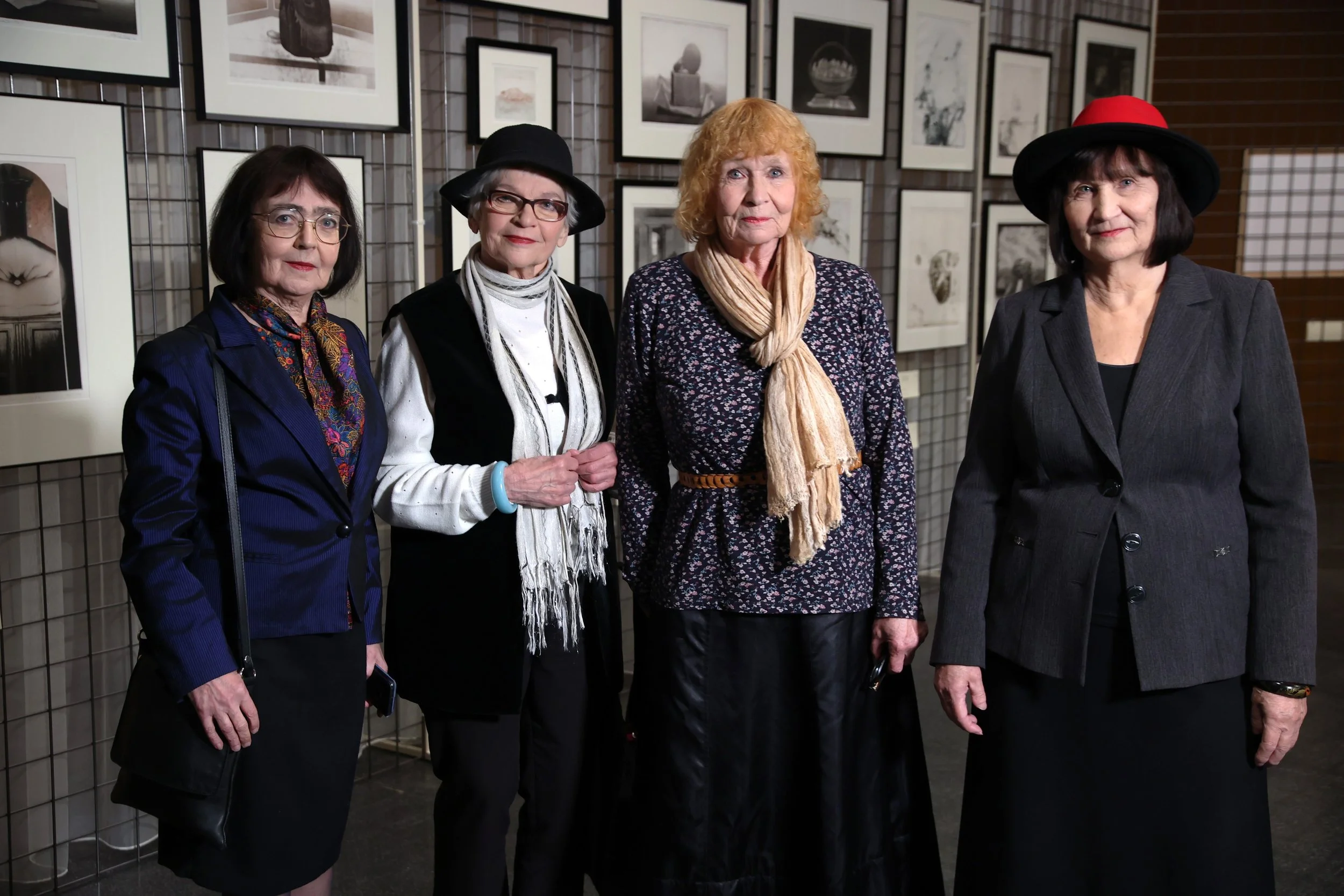
On the one hand, the work of these authors is a keyhole through which the specifics of Soviet-era graphics are revealed. On the other hand, the works of these authors and the themes they address seamlessly fit into the contemporary art scene.
These sometimes minimalist, sometimes explosive and lush picture spaces reflect the authors' diverse relationship with the environments and ways of being of the time. The main keyword that unites the different authorial positions of the artists under consideration is hybridity. By synthesizing artificial and natural elements, by freely putting phenomena, materials, stories, bodies, myths and spaces into dialogue with each other, the artists create new associations. We understand hybridity here as a relationship created between picture elements that is open, non-hierarchical, empathetic, flexible, non-binary and attentive, while at the same time highlighting the complexity of different phenomena. In these works, the border or the graphic line marking it is often a conventional, porous, relative and spacious possibility. It seems that the graphic artists did not aim to create rupturing conflicts in the picture spaces. On the contrary, they reconfigured the world and reality around them in ways that would not disintegrate or shatter into opposing particles, but would create a new synergy resulting from the interweaving of different elements. This is an approach that seems to offer something important for moving forward even in the crisis-ridden modern era.
The exhibition is conventionally divided into different chapters. As you walk through the space, you will discover the relationship between man and nature, the treatment of the body in different ways, the roles given to man by society, but also the roles taken on by him personally, the relationship with tradition and folklore, the impact of man on the environment and the feedback of this environment, the poetry of everyday reality, the dark vibrations of existence, the diverse experiences of living as a woman, motherhood and aging. One important keyword is camaraderie, which is also reflected in the multi-voiced conversation created between the different author positions and approaches.
Perhaps the rich legacy of female graphic artists, inscribed with attentiveness to the surrounding environment, the different aspects of being a woman, valuing and making visible closeness, care and intimacy, friendship and other social and human themes, offers us the necessary clues and points of support for persevering in the present time and imagining alternatives.
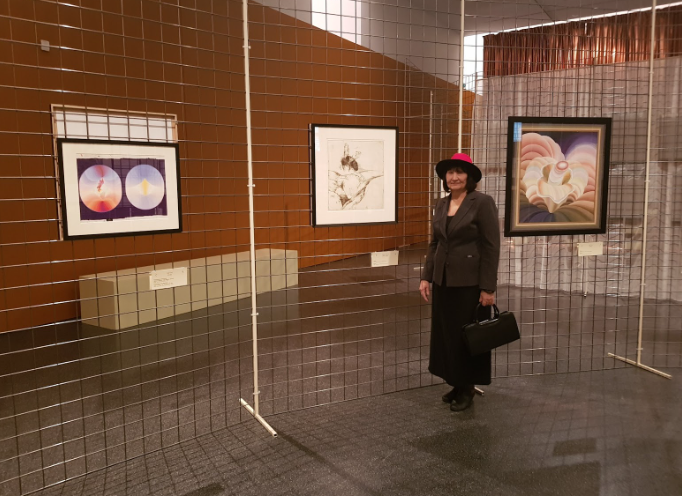
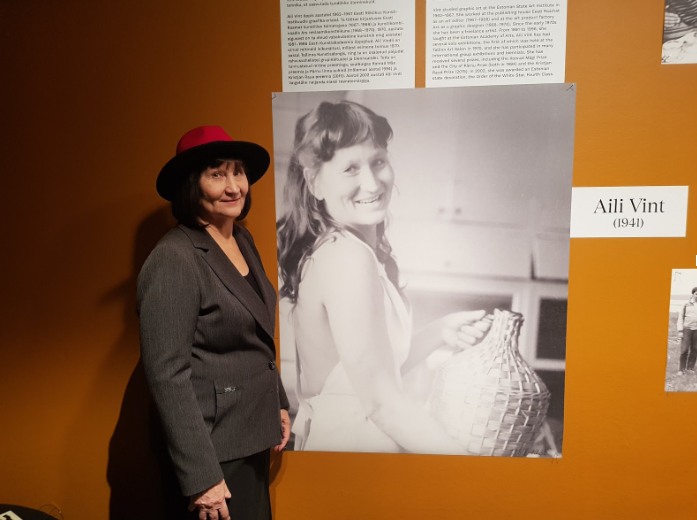
2021 Woman & Sea
Viinistu Art Museum in Tynn Gallery, Estonia
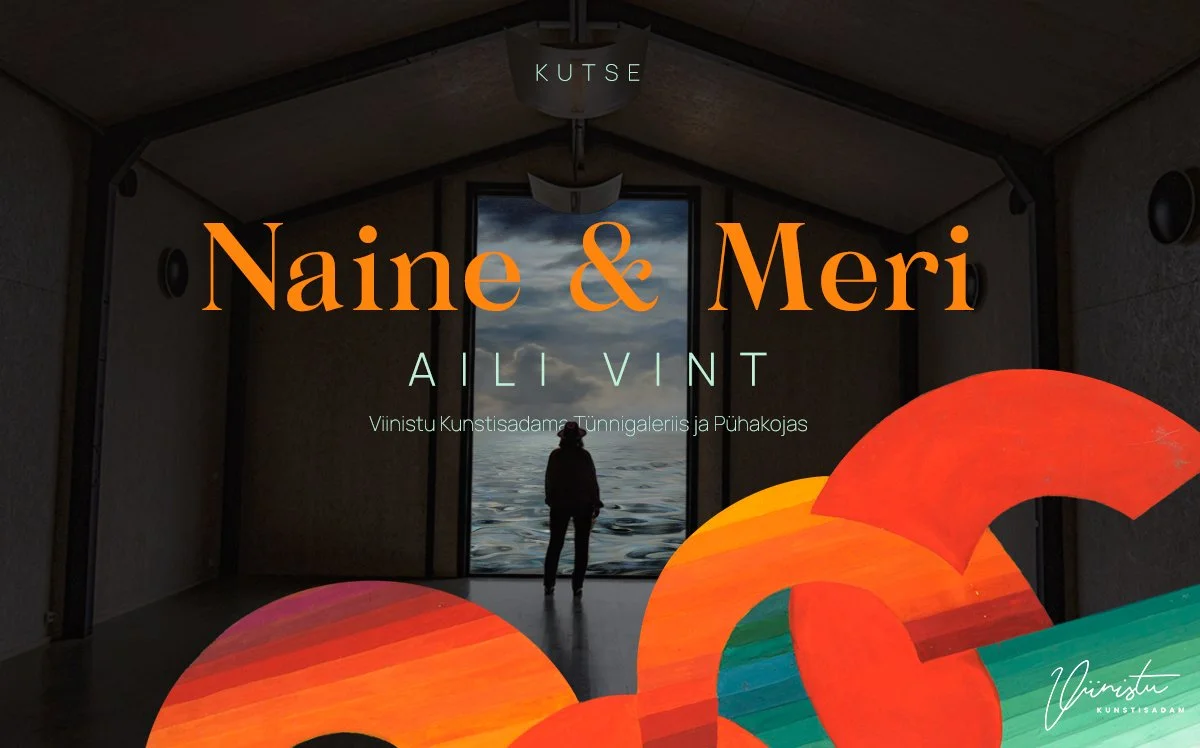
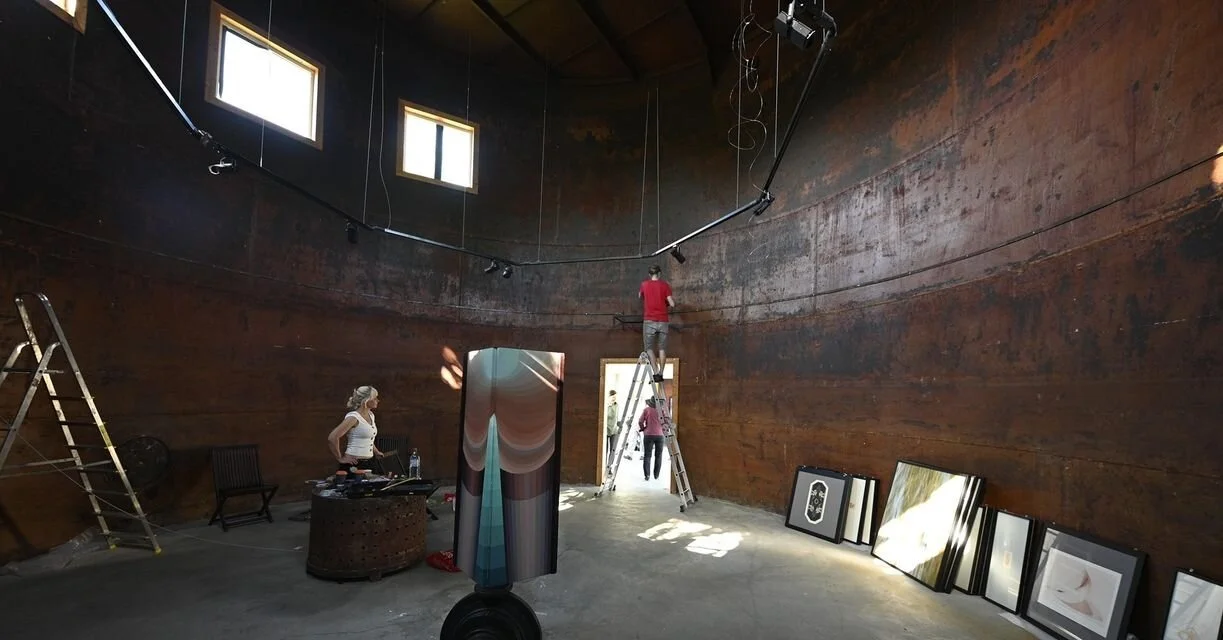
Our talented curator Andra Orn announced the opening of the exhibition in the media:
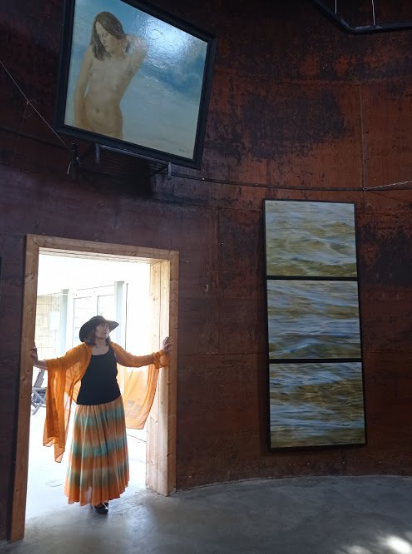
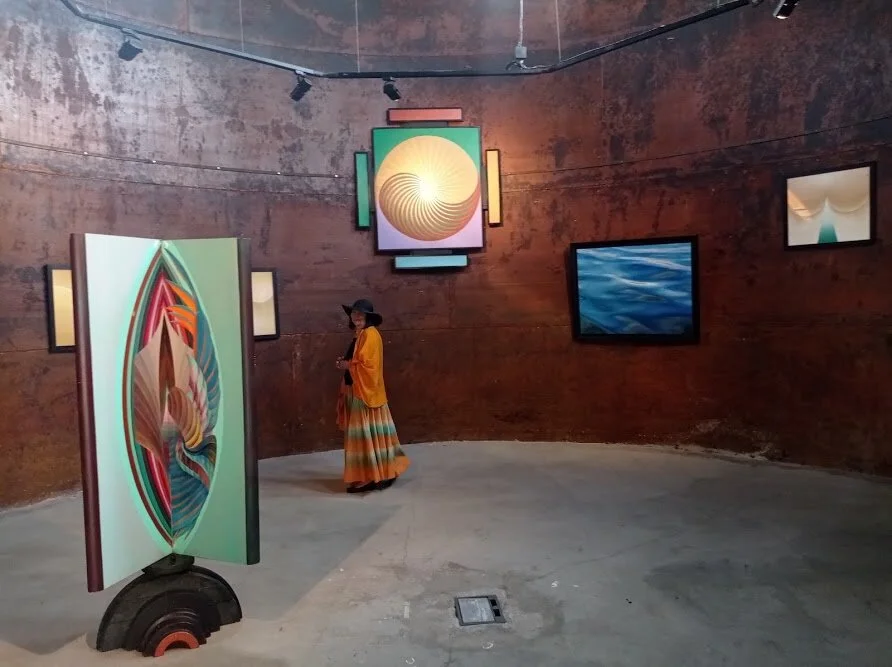
“Over the years, Viinistu Aili Vint's long-standing wish to convene legendary cultural figures of her time was fulfilled in order to revive and bring to the younger generation some of the Soviet era's constant and seemingly accidental happenings and the energy that is still characteristic of this society. Aili Vint's anniversary exhibition “Woman & Sea.” The exhibition rooms of Viinistu Barrel Galleries (Tynn gallery) could not be opened before the almighty Sea itself was greeted with a handshake.
And with that, a magical happening began. Aili did not miss the opportunity and made the audience play along to her instrument, forming a spiral of a human chain. The handshake began with the touch of the little girl Sea and moved through the audience's hands at lightning speed.
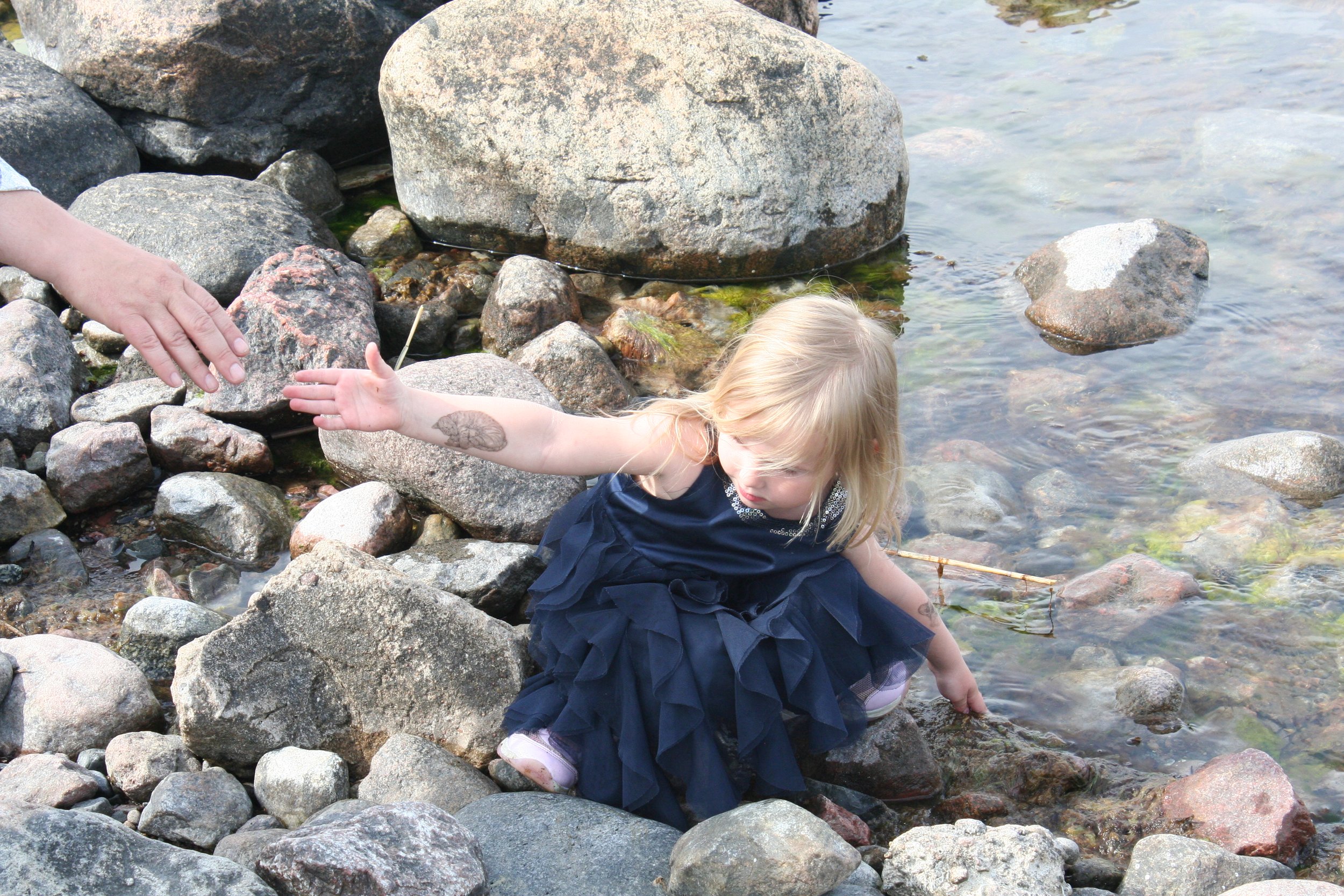
Photo by Toomas Kaasik
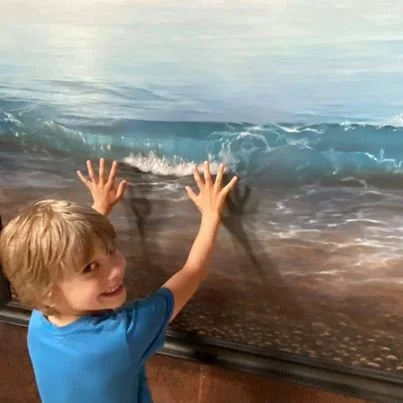
“The little girl pats the SEA with one hand and stretches out the other hand towards us.
A meaningful message, comfort and hope for our generation. So eternal and warm was this“MYSELF” moment”.

2021 ART IS DESIGN IS ART
Kumu Art Museum, Estonia
Curators: Eda Tuulberg, Karin Vicente
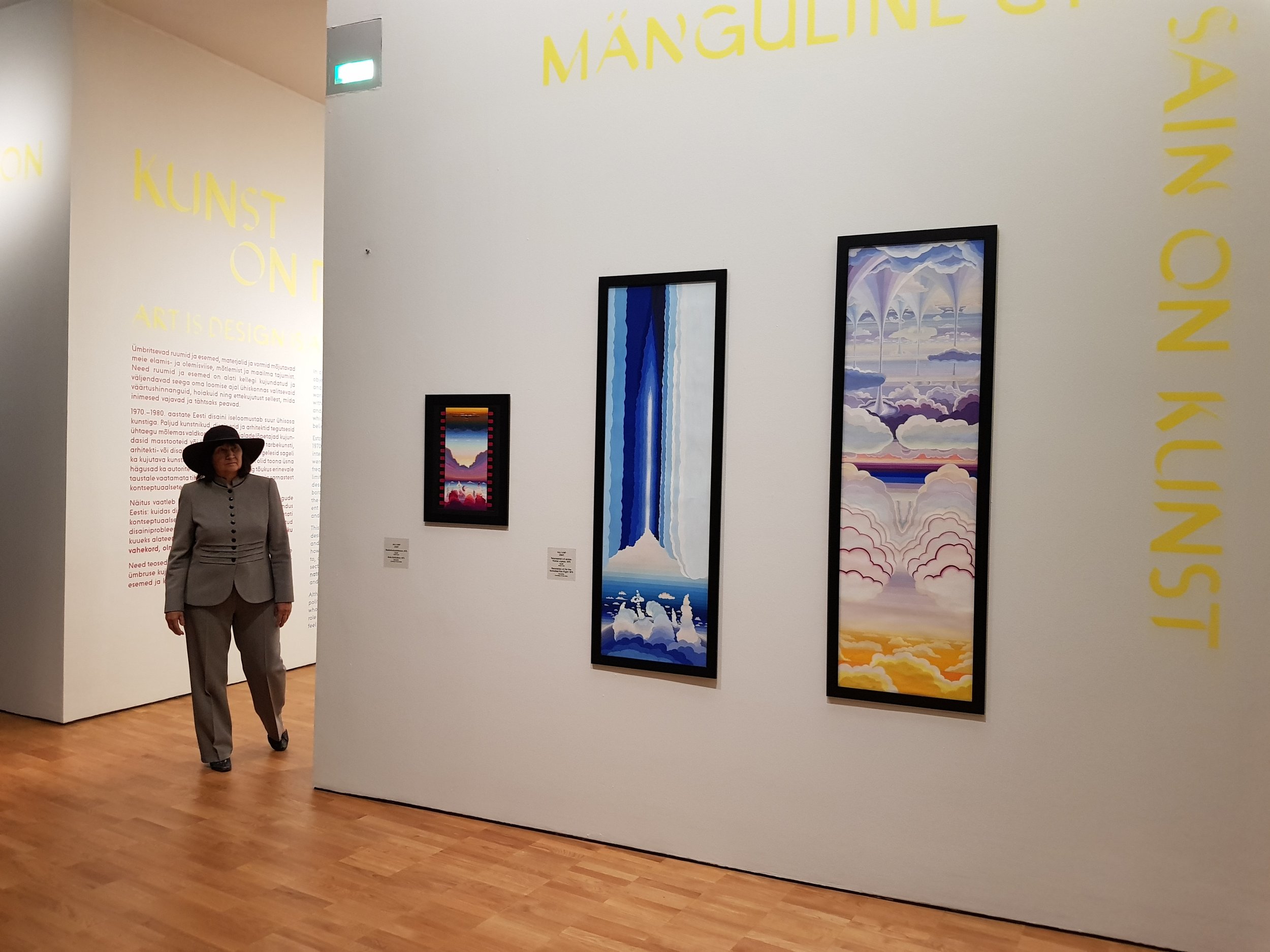
Estonian design in the second half of the Soviet period – the 1970s and 1980s – was marked by significant overlap and interactions with art. Many artists, designers and architects were active in both fields. Artists trained in applied arts frequently designed items for mass production or crafted limited-edition studio pieces, while those who had studied design or architecture also created works of fine art. The borders between the categories of art were also blurred for the artists themselves, whose works, despite the artists’ different backgrounds, were often inspired by the same problems and driven by similar impulses.
2018-2019 “Border Poetics” Estonian Art 1918 - 2019, Tretyakov Gallery, Moscow
Estonian Art 1918–2018” is an exhibition of the Art Museum of Estonia and the National Tretyakov Gallery, combining Estonian art of the last hundred years from the collections of the two museums.
At this exhibition there were my 3 seascapes.
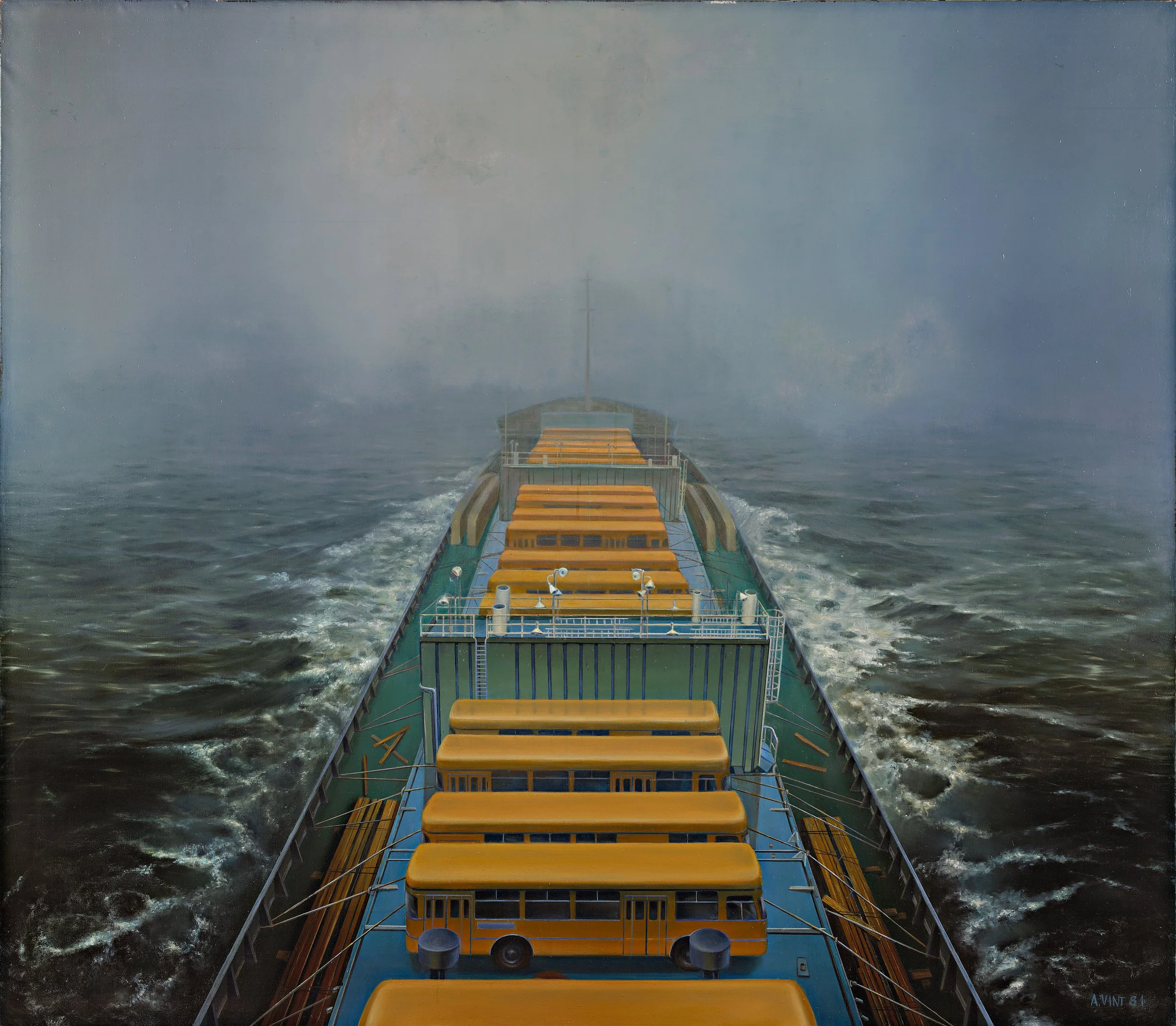
The Atlantic Sea 1981 , Oil on canvas 175 x 200 cm
Tretyakov Gallery
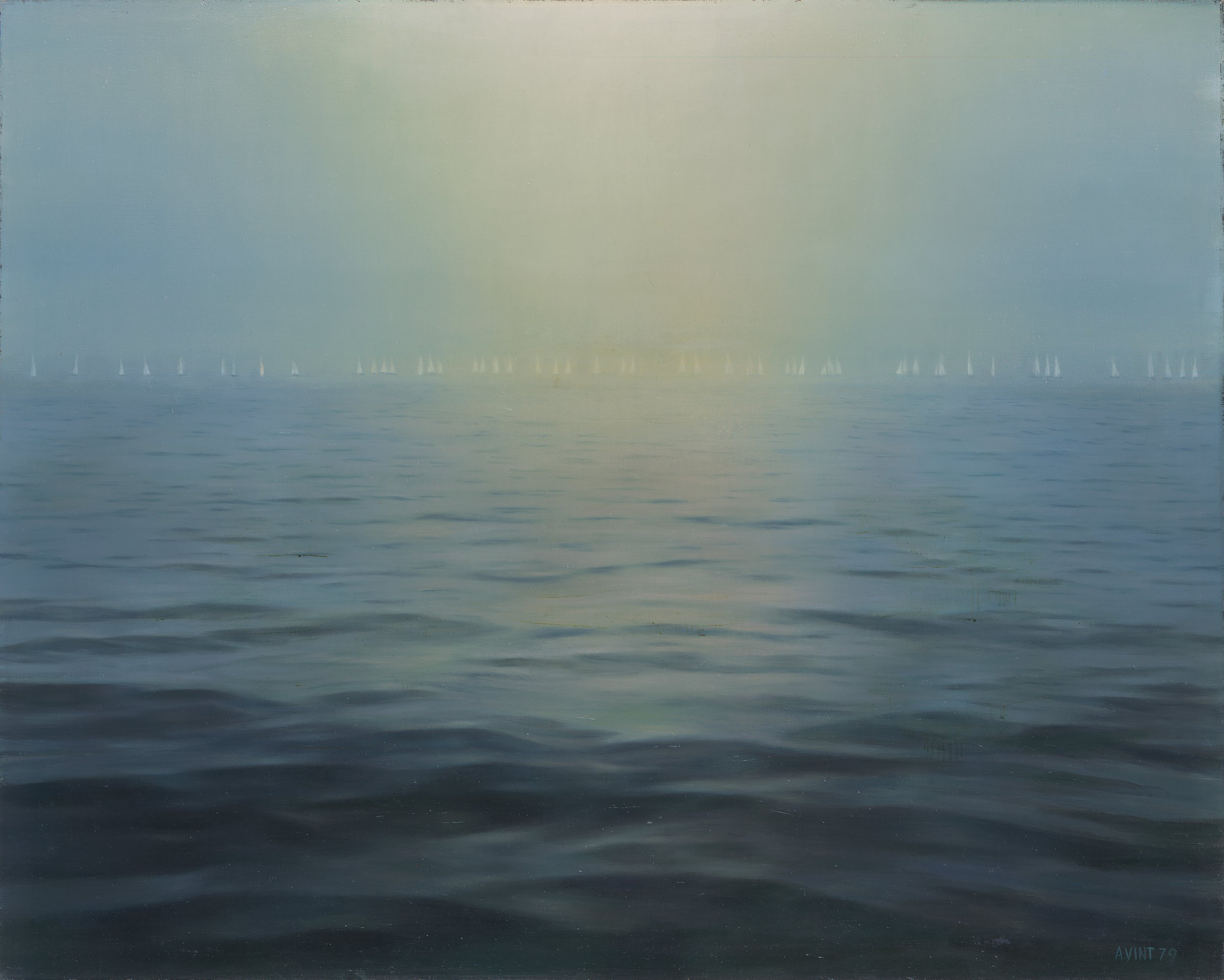
XXX Baltic Regatta. Waiting for The Wind, Triptychon II, 1979, Oil on canvas 174 x 150 cm
Tretyakov Gallery
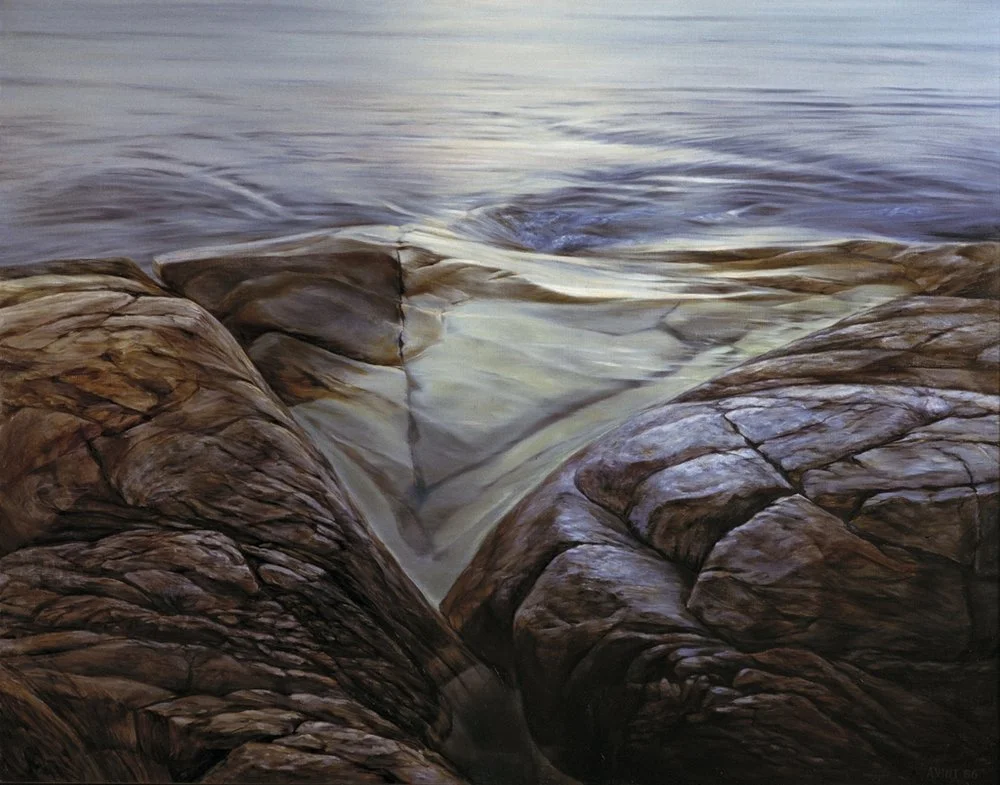
On the island of Tütarsaare 1986, Oil on canvas 115 x 145 cm
Moscow, Tretyakov Gallery
2019 in Kumu Art Museum: Open Collections. The Artist Takes the Floor
Invites visitors to walk through a forest of art history and sees to it that the walk is a meandering journey, taking museum-goers from main paths to enjoyable side trails which have not yet been fully assessed and categorised in art history. In inviting the artists, the curator considered their creative profiles with the aim of involving different media. Several invited artists made the initial choice of pieces of interest based on the electronic museum database Muis and the digital collection of the Art Museum of Estonia, which was followed by actual work with the collection. The works of art on exhibit cover the period from the 17th to the 21st centuries.
2018 Kris Lemsalu and Aili Vint at Bozar, Brussels @bozarbrussels until August
Curated by Maria Arusoo, director of CCA, Estonia! ••• The exhibition is part of the project "Somewhere in Between. Contemporary Art Scenes in Europe" in Bozar. Brussels
This project is centred around the theme of the female body in Aili Vint’s prints and the Serbian artist Ivana Bašić’s sculptures.
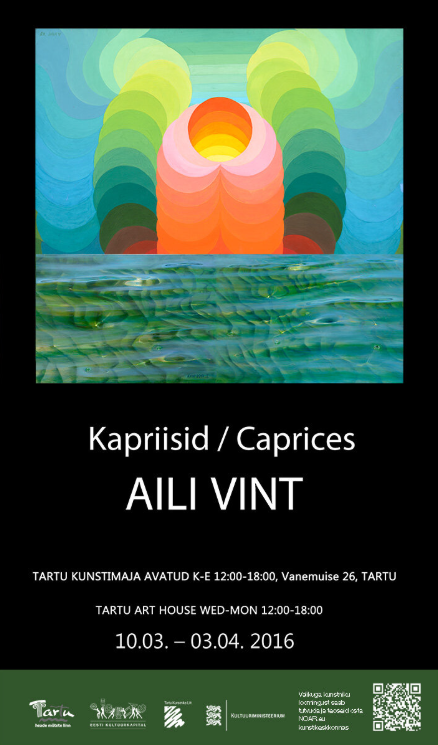
2016 Caprices in Tartu Art House
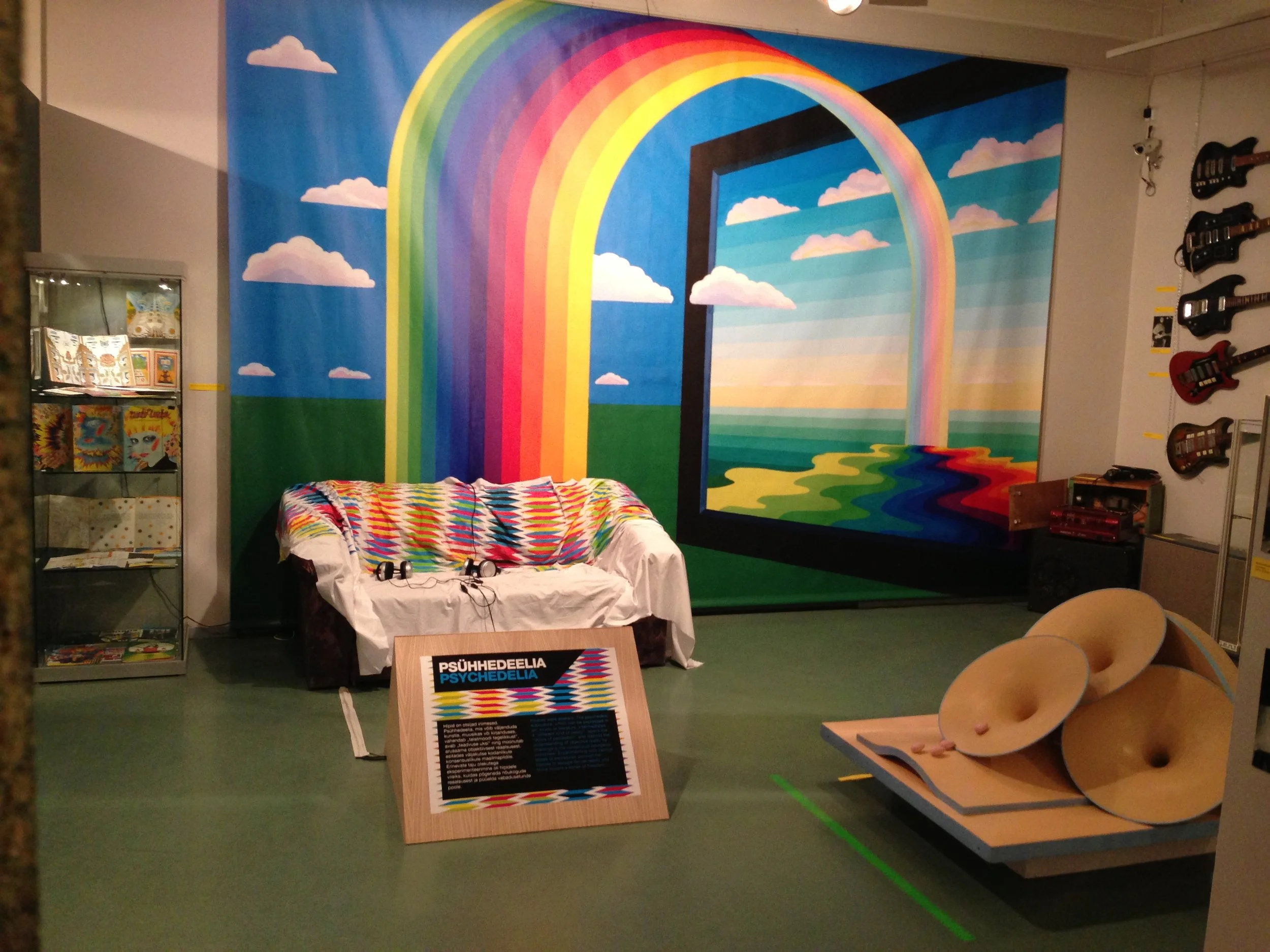
2016 Soviet Hippies are present at the exhibition: PEACE AND LOVE
Red Gallery, London
The Soviet Hippie Exhibition took visitors back to Soviet Estonia, to a parallel universe – the hippie movement that existed during the Brezhnev regime. Estonia was known as the “Soviet West” of the hippie movement due to its bohemian vibe and rock music landscape.
The Soviet hippies of the 1970s were represented by the exhibition in Red Gallery in London.
Aili Vint Illustration from the book "Yellow in blue like the sun in the sky" 1979, gouache on paper, 28 x 42 cm
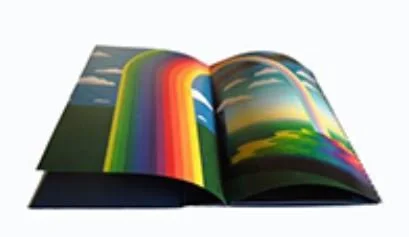
The same exhibition was also exhibited in 2016 in Moderna Museet Issues in Malmö.
2014 Aili Vint's and Toomas Vint's exhibition: ARTIST'S FOOTPRINT
Tallinn Art Hall, Estonia
Together with Toomas Vint it was our pleasure to offer, for all the visitors at the Tallinn Art Hall, the warmth of summer in the middle of a cold and dark northern winter. The Sun rose and set at our exhibit – for the whole month! Never mind that it did so in paintings and installations!
It was our intent to give visitors the right frame of mind as they entered the Tallinn Art Hall. For that end we prepared a surprise for the people rushing in from the winter gloom, feeling grey. They could see the Sun rising in the display window, and upon entering they were walking on grass and the scent of fresh-mown grass tickled their noses!
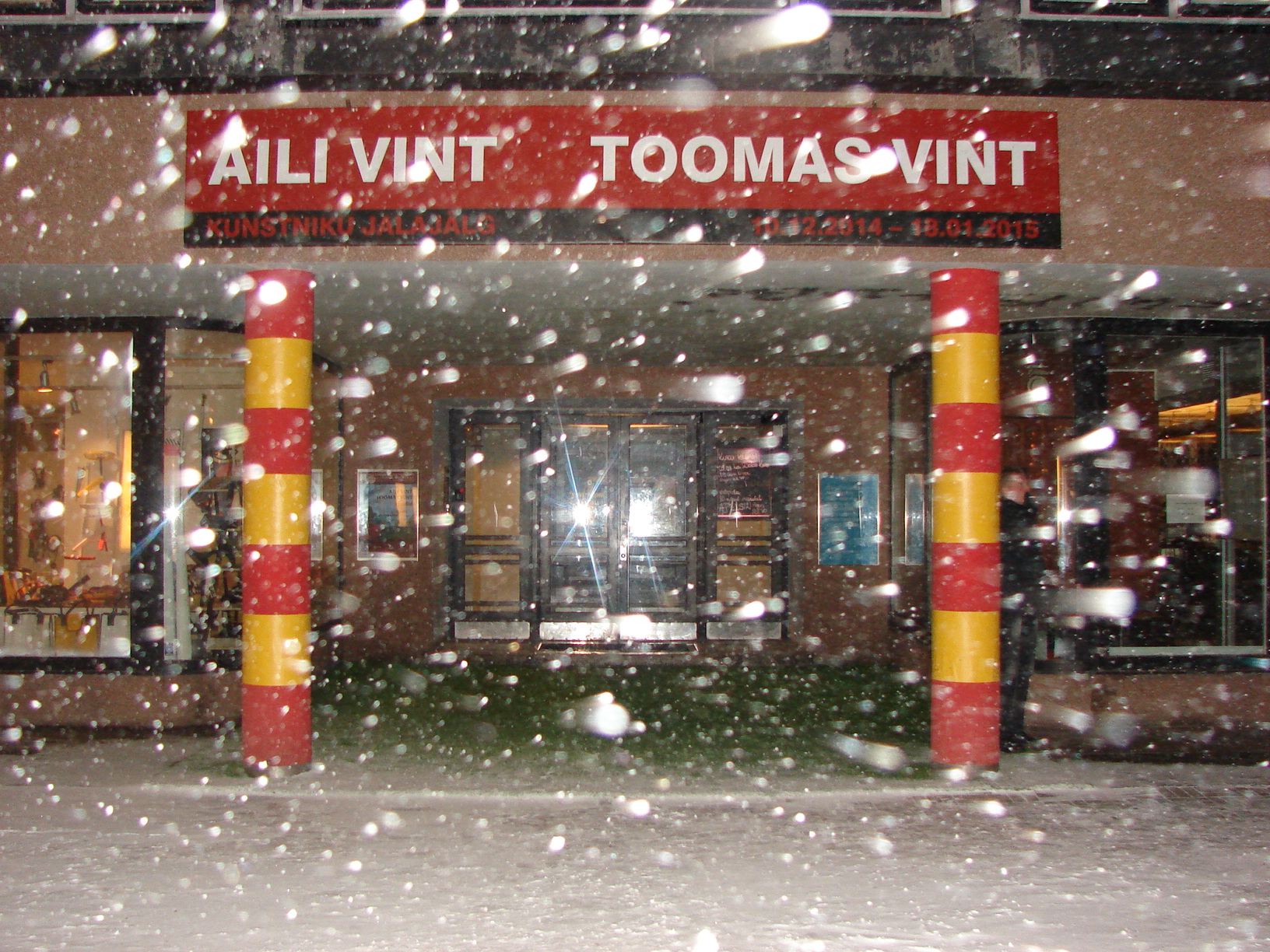
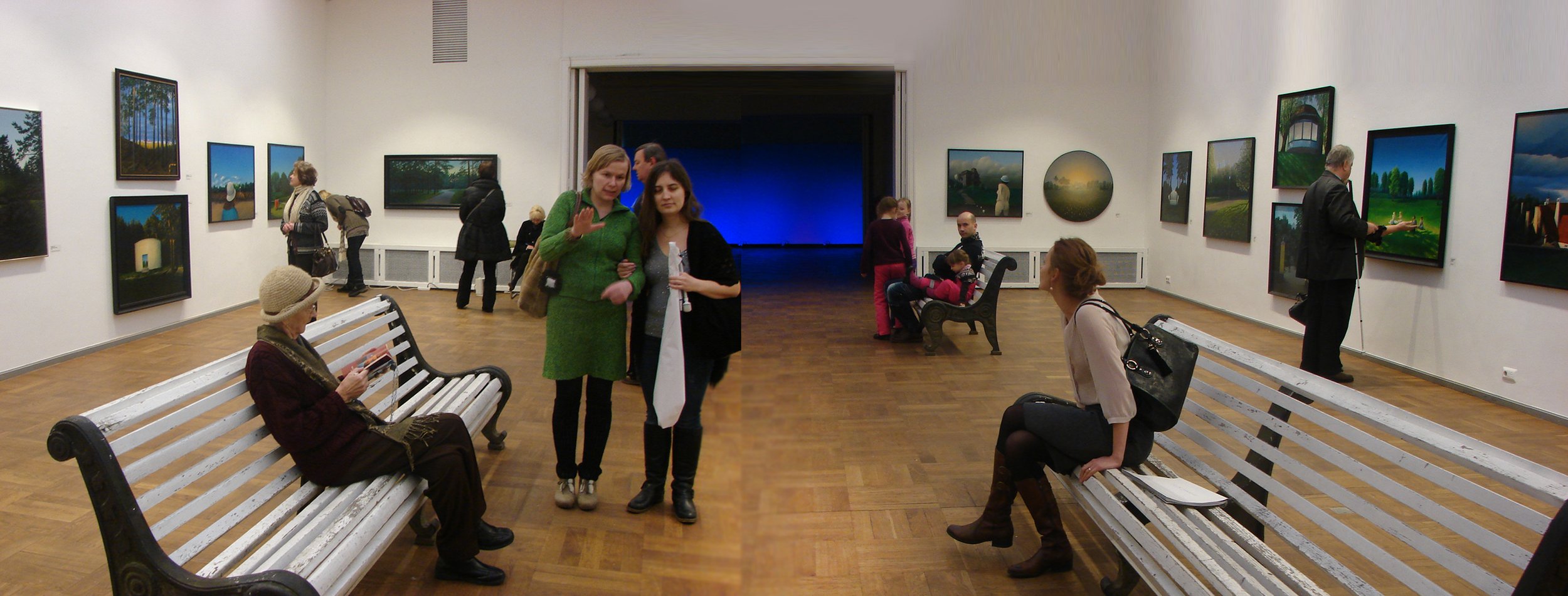
1995 RETRO. THE SUN SETS AND RISES AGAIN FROM THE ART HALL**
A gentle, meditative sculpture, alongside which my first performance was born in Tallinn Art Hall.
This performance took place in October 1995, just before our Northern summer began. The event lasted two days.
On the first day, people enjoyed the beach and saw the Sun off. The next morning, everyone gathered again to greet the real sunrise.
The Light Sculpture of Sunset emerged from childhood dreams, only becoming reality in 1995, when Tallinn Art Hall was renovated, yet all its rooms remained empty.
Watch the video below:
https://arhiiv.err.ee/vaata/uks-pilt-aili-vint-skulptuur-paikeseloojangust

Aili Vint The Sun Set and rise from the Tallinn Art Hall 2014-2015
Time-and-Space Specific Light Installation. It is a 30000 x 900 x 1400 cm expanse of sky where the light itself mixes the colours of the sunset, and so subtly that no artist could equal it.
Links to my homepage:
Creation
Stories